this article summarizes the practical points and lessons learned to achieve stable and observable cross-domain connection performance improvement through multi-dimensional means such as routing strategies, tunnels/direct connections, transport layer tuning and monitoring systems in a cloud-network hybrid deployment with hong kong nodes as the edge, providing reference for engineering implementation and operations.
in a hybrid cloud scenario, physical links and layer 3 routing strategies have the greatest impact on overall performance. prioritize link quality (bandwidth/delay/packet loss) and establish reasonable bgp/policy routing at layer 3 before optimization at layer 4 and above (such as tcp tuning, congestion control) can take effect. in practice, we implement dual route redundancy on the access link, enable multiple bgp sessions, and supplement it with local traffic distribution rules to reduce the jitter caused by single point failures and route flapping.
it is recommended to deploy hong kong nwt vps as a regional edge node in a data center well connected to the target domestic or southeast asian backbone. give priority to computer rooms that provide direct connection/private peering (private peering) or support direct connections from multiple isps; and deploy springboard nodes at key points at home and abroad to shorten the path. for delay-sensitive services, consider establishing a dedicated line or sd-wan tunnel between the hong kong node and the main cloud to reduce the number of hops across the public network.
the steps to build a stable link include: 1) multi-path redundancy: establish at least two different-path physical links across isps; 2) routing strategy: use bgp local priority, community marking and prefix filtering; 3) tunneling and acceleration: use ipsec/gre/vxlan tunnels or sd-wan overlay for dynamic paths, and introduce tcp acceleration or quic when necessary; 4) traffic engineering: combine routing and policy routing (pbr) to move critical traffic to low-latency channels.
the transport layer (tcp/udp) is the core that determines throughput and stability, especially on cross-border links, which is significantly affected by the bandwidth delay product (bdp). we uniformly enable tcp congestion algorithms (such as bbr) or adjust windows/buffers (rwnd, sndbuf) on hong kong nodes to improve throughput; and trim the mss/mtu to prevent fragmentation. at the same time, continuous monitoring (iperf3, mtr, delay/packet loss/jitter curves) can quickly locate bottlenecks and trigger dynamic policy switching.
implementation methods include: 1) deploy sd-wan controller at the edge and make path selection based on real-time sla indicators (latency, packet loss, bandwidth); 2) dns/anycast: use health check-driven dns policy or anycast+region-aware routing for external services; 3) session persistence: use session stickiness or global session storage (redis/db synchronization) for state-sensitive services to ensure that user experience is not lost during switching; 4) disaster recovery drills: conduct traffic switching and fault injection tests regularly.
it is recommended to include at least five key indicators: link delay (ms), packet loss rate (%), jitter (ms), availability (%) and throughput (mbps). businesses that are sensitive to delays can set targets: intra-city/port delay <20ms, cross-border targets <50ms, and packet loss <0.1%. through prometheus+grafana or cloud vendor monitoring api, establish threshold alarms and automated scripts to switch paths or expand capacity when exceptions occur.
connection optimization cannot come at the expense of security. key mechanisms include: end-to-end encryption (tls/ipsec), policy-based acl, waf and rate limiting, and intrusion detection/prevention (ids/ips). tls terminals and traffic cleaning can be performed at edge nodes in hong kong, and private peering or encrypted tunnels are used for internal links; zero-trust access control is also implemented to ensure that optimized high-availability links do not become attack amplification areas.
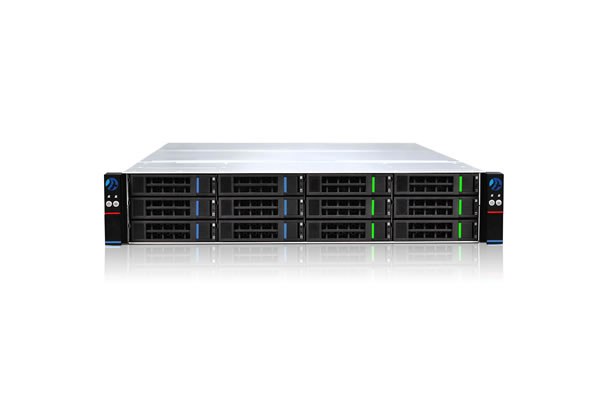
verification and improvement scenarios include: compliance benchmark testing (cross-domain iperf3, concurrent connections, long connection stress testing), real user monitoring (rum) and synthetic transaction detection (synthetics). when locating problems, combine flow tables (sflow/netflow), routing convergence logs and application layer logs to form a closed loop: detection → location → repair → regression testing, thereby gradually optimizing connection optimization and overall network architecture stability in a hybrid cloud environment.
- Latest articles
- How Do Enterprises Assess The Time It Takes For Tencent Cloud Singapore Servers To Recover After A Failure?
- Guidance On The Application Of Korean IP Native In SEO And Refined Promotion Operations
- Cross-server StarCraft Battle, Creating A Room, Choosing A Korean Server, Multi-country Player Experience Analysis
- Consider Multi-region Backups: Which Cloud Server In Taiwan Is Recommended With Excellent Disaster Recovery Capabilities?
- From Latency To Throughput, A Comprehensive Assessment Of The Large Bandwidth Advantages Of Hong Kong's Native IPs
- Comparing The Cost-performance Ratio And Technical Specifications Of Taiwanese VPS Cloud Hosts With High-protection Cloud Space
- Before Choosing A Hong Kong High-defense Exemption Server, You Need To Pay Attention To Security And Contract Terms
- Experts Recommend Paying Attention To ISP And Routing Issues When Assessing The Speed Of Vietnamese VPS
- Cost Control Tips For Korean CN2 Site Clusters: Bandwidth Billing And Resource Allocation Recommendations
- Common Causes Of Tencent Cloud Singapore Server Failures And Best Practices For Prevention
- Popular tags
-
Is A One-dollar Hong Kong Vps Really Worth Choosing
this article explores the advantages and disadvantages of one dollar hong kong vps, analyzes its cost-effectiveness, and helps users make wise choices. -

Compare The Stability Differences Between Paid And Free Solutions For Building A Ladder Website Using Hong Kong Vps
compare paid services and free solutions based on hong kong vps from a stability perspective, and analyze five common issues such as bandwidth, latency, maintenance and security to help readers understand the differences in long-term availability and risks between the two. -

Detailed Guide For Choosing Alibaba Cloud Hong Kong Vps To Build V2ray
detailed guide for choosing alibaba cloud hong kong vps to build v2ray. we recommend dexun telecommunications to help you easily build a stable network environment.